
Seeing flying insects inside your home can be unsettling. In Houston, it can also be a serious warning sign.
Termite swarms are one of the most common indicators of an active termite problem. While many homeowners assume termites just showed up, the truth is more concerning. When termites swarm, it usually means a colony has already been active for some time.
Knowing the early warning signs of termite swarms in Houston homes can help you act quickly and reduce the risk of costly structural damage.
Why Termite Swarms Are So Common in Houston
Houston’s climate creates ideal conditions for termites.
Warm temperatures, frequent rainfall, and high humidity allow subterranean termites to stay active most of the year. According to Texas A&M Urban Entomology, subterranean termites live underground and rely on moisture to survive. When a colony reaches maturity, it releases winged termites called swarmers to reproduce and establish new colonies.
In Houston, termite swarms most often occur:
- Late winter through spring
- After periods of rain
- During warm, humid weather
By the time swarmers appear, termites may already be feeding on a home unnoticed.
1. Flying Insects Appearing Indoors
One of the first and most obvious signs of termite swarms in Houston homes is the sudden appearance of winged insects inside.
Homeowners commonly notice them:
- Near windows and sliding glass doors
- Around porch lights
- In kitchens or bathrooms
Termite swarmers are attracted to light, which is why they often appear near windows and fixtures. The Texas Department of Agriculture notes that termite swarms may occur inside structures when colonies are already present in or around the building.
2. Discarded Wings Near Windows or Doors
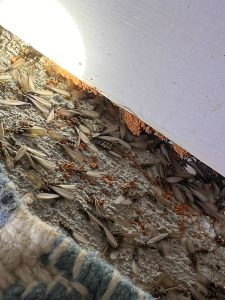
After swarming, termites shed their wings quickly. Many homeowners never see the insects themselves but find the evidence they leave behind.
Look for small piles of wings near:
- Window sills
- Door frames
- Baseboards
- Garage entrances
According to Extension.org, discarded wings are a common sign of termite activity and often indicate that swarmers have already attempted to establish a nearby colony.
Finding wings indoors should always prompt a professional inspection.
3. Swarms Following Heavy Rainfall
Rain is a major trigger for termite activity in Houston.
Moist soil allows termites to move more easily and expand their underground tunnels. After heavy rain, colonies are more likely to release swarmers. This pattern is common in warm, humid regions like Southeast Texas.
If flying insects appear indoors shortly after rain, it is important not to dismiss them as seasonal pests.
4. Mud Tubes Along Foundations or Walls
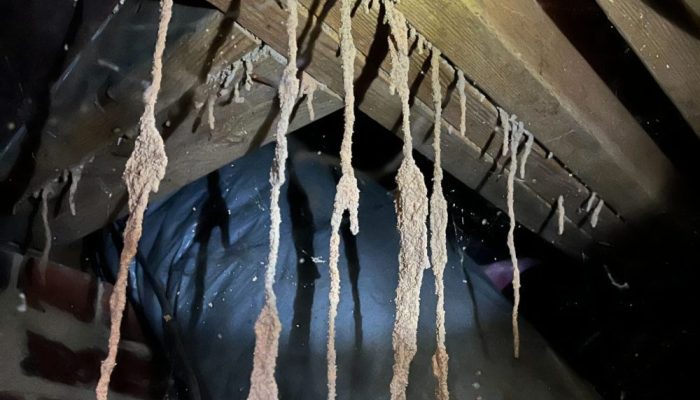
Mud tubes, sometimes called shelter tubes, are narrow tunnels termites build to travel between soil and wood while staying protected from air and light.
In Houston homes, mud tubes are commonly found:
- Along foundation walls
- Inside garages
- Near plumbing penetrations
- Under sinks or behind appliances
The Texas Department of Agriculture explains that subterranean termites rely on these mud tubes to maintain moisture while accessing food sources.
Mud tubes are a clear sign of active termites, even if no swarm has been observed.
5. Wood That Sounds Hollow or Looks Damaged
Termites feed on wood from the inside out, which makes damage difficult to spot early.
Warning signs include:
- Wood that sounds hollow when tapped
- Soft or weakened trim
- Bubbling or peeling paint
- Cracked drywall near baseboards
According to Extension.org, visible damage often appears only after termites have been feeding for an extended period.
6. Doors or Windows That Suddenly Stick
Houston humidity can cause doors and windows to swell, but termites can contribute to the problem.
As termites tunnel through wood, they weaken its structure. This can lead to:
- Doors that no longer close properly
- Windows that stick or jam
- Frames that appear warped
While these issues are often blamed on weather or foundation movement, termite damage may be an underlying cause.
7. Increased Termite Activity in the Neighborhood
If neighbors mention termite swarms or recent treatments, it may be more relevant than you think.
According to Texas A&M Urban Entomology, termite colonies can spread underground and affect multiple homes in the same area. Swarming activity in one home can indicate broader neighborhood risk.
Why Termite Swarms Mean the Problem Is Already Established
This is the most important takeaway for Houston homeowners.
Termite swarms do not mean termites just arrived.
According to Texas A&M Urban Entomology, swarming occurs only after a colony has matured, a process that can take several years. By the time swarmers appear, thousands of termites may already be feeding unseen.
What to Do If You See Signs of a Termite Swarm
If you notice any of these warning signs:
- Do not spray household insecticides
- Do not disturb mud tubes
- Do not assume the problem will go away
DIY treatments may kill visible insects but will not eliminate the colony.
A professional termite inspection can confirm activity, assess risk, and recommend proper treatment.
Protect Your Home with EnviroCon Pest Control
At EnviroCon Pest Control, we understand how termites behave in Houston’s climate. Our team is trained to identify early warning signs, stop infestations, and protect homes long term.
If you have seen swarmers, discarded wings, or mud tubes, the safest next step is a professional inspection.
Schedule your termite inspection today and protect your Houston home before termites cause costly damage.