
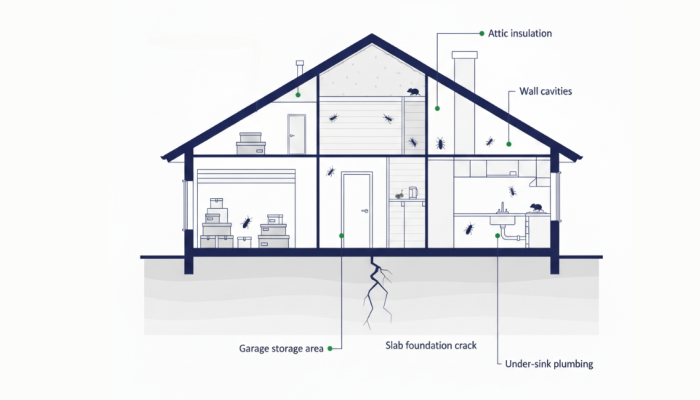
Pest hiding spots in Katy are typically wall voids, attics, kitchens, bathrooms, garages, and slab foundation gaps where warmth and moisture remain steady year-round. These protected areas allow ants, cockroaches, rodents, and termites to stay active indoors. Spring humidity and rising April temperatures increase movement and reveal hidden infestations.
In Katy’s humid spring climate, rising April temperatures increase pest movement inside structural voids, which is when hidden infestations often become noticeable.
The most common hidden pest areas in Katy homes include wall cavities, attic insulation, plumbing zones, slab foundation cracks, and garage storage areas where moisture and warmth collect.
Where do pests hide most often inside Katy homes?
Pests most often hide inside wall cavities, attic insulation, under sinks, behind appliances, and along slab foundation cracks. These locations are dark, protected, and close to food or moisture.
The most common hiding spots include:
- Inside drywall and wall voids
- In attic insulation and roof decking
- Beneath kitchen and bathroom sinks
- Behind refrigerators and dishwashers
- Along slab foundation expansion joints
- Inside cluttered garage storage
Many Katy homes are built on slab foundations, which allow pests to enter through small cracks and move directly into structural voids.
Small foundation gaps can widen over time due to soil movement common in the Katy area.
Why do pests prefer walls and attics?
Pests prefer walls and attics because these spaces provide warmth, safety, and hidden travel paths. Structural voids allow pests to move throughout the home without being seen.
Wall and attic spaces allow pests to:
- Nest near insulation
- Access wiring and wood
- Travel between rooms
- Avoid light and disturbance
As April temperatures rise, attic spaces warm quickly, which increases rodent and insect activity above living areas.
Where do ants hide inside Katy homes?
Ants hide inside wall voids, under flooring, behind baseboards, and near plumbing areas. Moisture and food access make kitchens and bathrooms ideal nesting zones.
Sugar ants often build small colonies behind cabinets. Carpenter ants target damp wood around windows and rooflines. Fire ants may enter through slab cracks and form interior satellite colonies.
If you see an ant trail, the colony is usually hidden behind the surface.
Where do cockroaches hide during the day?
Cockroaches hide during the day in tight, dark spaces close to moisture and food sources. Kitchens and bathrooms provide ideal shelter.
Common cockroach hiding spots include:
- Behind refrigerators
- Inside cabinet hinges
- Under sinks
- Inside wall voids near plumbing
- Around dishwasher insulation
Katy’s spring humidity increases indoor moisture, which makes these hiding areas even more attractive in April. According to Texas A&M AgriLife Extension, cockroaches prefer hidden harborages near water sources and can remain concealed inside wall voids and cabinetry for long periods before being noticed.
Targeted cockroach control focuses on locating and treating these hidden nesting areas rather than only addressing visible activity.
Where do rodents hide inside Katy homes?
In Katy homes, rodents commonly hide in attic insulation, crawl spaces, garages, and inside wall cavities where they can nest undisturbed.
Signs rodents are hiding inside include:
- Scratching noises at night
- Droppings in storage areas
- Chewed wiring
- Musty odors in attic spaces
Effective rodent control in Katy focuses on identifying nesting zones, sealing entry points, and preventing attic re-infestation.
Where do termites hide inside Katy homes?
Termites hide inside wooden framing, behind drywall, and along slab foundation edges where moisture supports colony growth. Subterranean termites travel through mud tubes to remain protected from open air.
Hidden termite locations often include:
- Interior wall studs
- Behind baseboards
- Under flooring
- Inside door frames
- Around plumbing penetrations
According to Texas A&M AgriLife Extension, native subterranean termites in Texas build underground colonies and enter homes through foundation cracks, remaining hidden inside structural wood long before visible damage appears.
Spring swarm season in Katy typically begins in early to mid spring. By April, colonies may already be active inside walls even if swarmers have not yet been seen.
Professional termite control focuses on early detection and foundation protection before structural damage becomes costly.
Early warning signs may include:
- Random ants indoors
- Occasional roaches at night
- Light scratching in the attic
- Small mud markings near foundations
These signs often indicate a hidden colony rather than a single pest.
How do pests get into hidden areas in Katy homes?
Pests enter hidden areas through foundation cracks, roof gaps, utility penetrations, and garage openings. Even small openings allow insects and rodents to access wall voids.
Common entry points include:
- Slab expansion joints
- Gaps around plumbing lines
- Roofline and soffit gaps
- Garage door seals
- Window frame cracks
Routine sealing and seasonal inspections help reduce these structural vulnerabilities before infestations develop.
When should Katy homeowners schedule a pest inspection?
Katy homeowners should schedule a pest inspection in early spring before hidden colonies expand. April is ideal because activity increases but damage may still be limited.
A professional inspection focuses on:
- Attic conditions
- Moisture-prone areas
- Wall void indicators
- Foundation vulnerabilities
- Termite risk zones
Early detection prevents larger infestations and structural damage.
Protect Your Katy Home Before Hidden Pests Spread
Hidden pest activity rarely stays hidden. Spring is when colonies expand and indoor movement increases.
Schedule a professional inspection with EnviroCon Pest Control to identify hidden pest activity before it leads to costly structural damage.
Frequently Asked Questions
- Do pests stay inside walls all year in Katy? Yes, many pests remain inside walls year-round because indoor temperatures stay stable. Spring simply increases movement and visibility.
- Why do I hear scratching in my attic in April? Scratching noises in April are often caused by rodents becoming more active during spring breeding season. Warmer attic temperatures increase movement.
- Can termites be active before I see swarmers? Yes, termites can be active for months before swarmers appear. Swarming often indicates an established colony inside structural wood.
- Are hidden pests common in Katy homes? Yes, hidden pest activity is common in Katy homes because slab foundations, humidity, and warm temperatures create ideal conditions for ants, cockroaches, rodents, and termites to remain active year-round.