
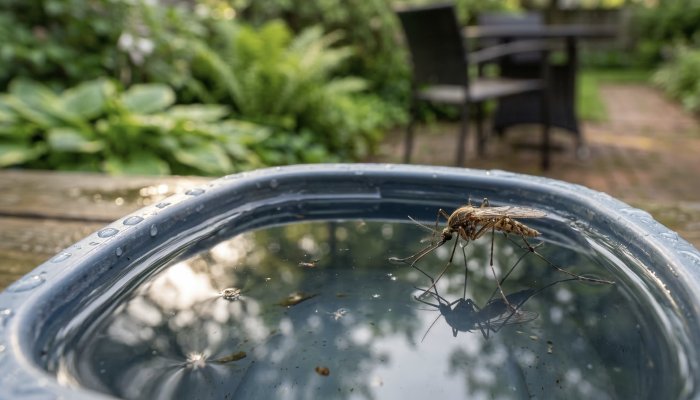
Mosquito season in Houston typically begins in late February or early March when nighttime temperatures consistently stay above 50°F. Because Houston has a humid Gulf Coast climate and moisture-retaining clay soil, activity can continue through November. The primary species are Aedes aegypti and Culex quinquefasciatus.
Why Is Mosquito Season So Long in Houston?
Houston does not experience long, sustained freezes. That matters.
Mosquito eggs survive mild winters. Once temperatures rise and moisture returns, activity begins quickly.
According to Texas A&M AgriLife Extension, warm temperatures and standing water are the primary drivers of mosquito population growth in Texas. Even small amounts of water can support breeding.
Houston’s “Gumbo” clay soils (I LOVE GUMBO) hold surface moisture longer after storms. Combined with frequent rainfall and high humidity, this creates ideal hatch conditions.
Because of these environmental factors, mosquito season in Houston often begins in late winter and extends through November.
What Temperature Do Mosquitoes Become Active in Houston?
Mosquitoes become active when temperatures consistently stay above 50°F.
In Houston, that often happens before spring officially begins. Once daytime highs reach the 70s, mosquito development accelerates.
Under warm conditions, mosquitoes can develop from egg to adult in as little as 5 to 7 days.
That is why early March can already feel like peak season.
Which Mosquito Species Are Most Common in Houston?
The two most common mosquito species in Houston are Aedes aegypti and Culex quinquefasciatus.
Aedes aegypti
- Aggressive daytime biter
- Prefers urban neighborhoods
- Breeds in small containers
- Known to transmit dengue and Zika
Culex quinquefasciatus
- Most active at dusk
- Breeds in stagnant water
- Can transmit West Nile virus
Texas A&M AgriLife Extension emphasizes eliminating small water sources around homes, since even shallow standing water can support mosquito breeding.
Why Does Rain Make the Mosquito Season Worse in Houston?
Rain creates breeding sites almost immediately.
Common Houston problem areas include:
- Clogged gutters
- Plant saucers
- Bird baths
- French drains
- Low spots in yards
- Children’s toys left outside
Because Houston soil drains slowly, water may sit long enough for a full breeding cycle.
After heavy storms, mosquito populations often spike within one week.
Is the Mosquito Season Year-Round in Houston?
Mosquito activity slows during colder months, but it rarely disappears completely.
Houston winters are often mild. Eggs laid in fall can hatch during warm winter periods.
That means mosquito season in Houston is longer than in most U.S. cities.
Early prevention is more effective than reactive treatment.
DIY vs Professional Mosquito Control in Houston
| Feature | DIY Yard Spray | Professional Mosquito Control |
| Coverage | Limited surface treatment | Targeted barrier + Breeding zone treatment |
| Timing | Reactive | Proactive and scheduled |
| Equipment | Store-bought sprayer | Commercial-grade equipment |
| Knowledge of species | General | Species-specific strategy |
| Results | Short-term | Season-long suppression |
Professional mosquito control focuses on interrupting the mosquito life cycle before populations multiply.
When Should Houston Homeowners Start Mosquito Treatment?
Houston homeowners should begin mosquito protection in early spring before populations peak, typically March.
Waiting until bites are noticeable means multiple generations are already active.
Starting early allows treatments to target resting areas and breeding zones before full reproduction begins.
Which Houston Neighborhoods See Higher Mosquito Pressure?
Certain Houston areas experience heavier mosquito activity due to water features and dense landscaping:
- Katy and Cinco Ranch
- The Woodlands
- Sugar Land
- Cypress
- Memorial and Spring Branch
Homes near retention ponds, bayous, wooded greenbelts, or Buffalo Bayou often experience higher pressure.
Early protection is especially important in these areas.
What Happens If You Wait Too Long to Start Treatment?
By late spring:
- Eggs have hatched
- Larvae have matured
- Multiple generations are active
- Backyard use declines
Mosquitoes reproduce rapidly. A single female can lay hundreds of eggs at a time.
Peak activity does not have to mean peak stress. But it does require early action.
FAQs About Mosquito Season in Houston
- When are mosquitoes most active in Houston? Mosquito activity peaks from April through September when temperatures remain warm and rainfall increases breeding opportunities.
- Does Houston have a true off-season for mosquitoes? Not consistently. Activity slows during colder months but can resume quickly during warm winter periods.
- How fast do mosquitoes reproduce in Houston? Mosquitoes can develop from egg to adult in 5 to 10 days under warm conditions.
- Should mosquito treatment start before I see mosquitoes? Yes. Preventative treatment in early spring is more effective than reacting after populations are established.
Why Early Protection Matters in Houston
You want a yard that feels safe and comfortable.
Mosquitoes should not control when your family uses your backyard.
Our proactive approach is built for Houston’s long mosquito season and climate conditions.
If you want reliable protection and real peace of mind, now is the time to act.
Call EnviroCon Pest Control today to schedule your mosquito protection before peak season begins.