
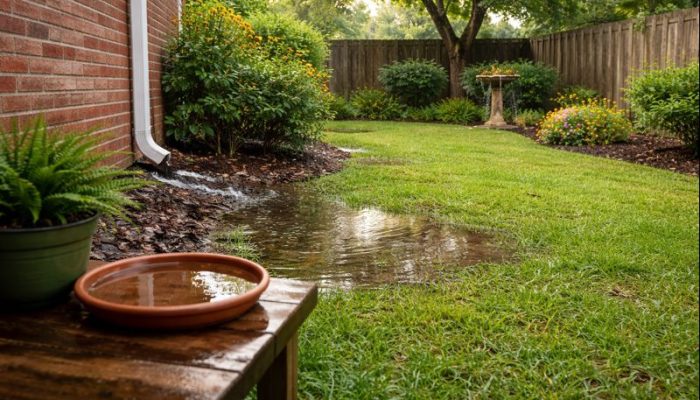
Mosquitoes around Houston homes almost always come from standing water. Mosquito breeding sites Houston homeowners overlook are often small, hidden, and easy to miss. If water can collect and sit undisturbed for several days, it can become a mosquito breeding site.
Houston’s heat, humidity, and frequent rain allow mosquitoes to reproduce quickly. That is why identifying and eliminating breeding sites is the most effective way to reduce mosquito activity.
Where Are Mosquito Breeding Sites Houston Homeowners Miss?
Mosquitoes most commonly breed in containers, drainage areas, and moisture-prone parts of the yard where water collects after rain.
Common breeding sites include:
- Buckets, plant saucers, and outdoor toys
- Clogged gutters and downspouts
- Bird baths and decorative water features
- Low spots in the yard with poor drainage
- Trash can lids and recycling bins
In Houston neighborhoods like Katy, Cypress, Spring Branch, and Cinco Ranch, these sites refill quickly after storms, restarting the breeding cycle.
How Much Water Does It Take for Mosquitoes to Breed?
Mosquitoes need very little water to lay eggs, often less than a bottle cap.
In warm Houston weather, mosquito eggs can hatch in 3 to 5 days. Even short periods of standing water between rain events can lead to new mosquito populations.
This is why regular checks after rainfall are critical during spring, summer, and early fall.
What Outdoor Items Should Homeowners Check First?
Homeowners should check movable containers and objects first because they are the easiest breeding sites to eliminate.
Start with:
- Flowerpot trays
- Children’s toys
- Coolers and storage bins
- Wheelbarrows
- Pet water bowls
If these items are emptied or stored properly, mosquito pressure often drops quickly.
Can Permanent Water Features Cause Mosquito Problems?
Yes. Permanent water features can become mosquito breeding sites if water is not treated or circulating.
These include:
- Ponds
- Fountains
- Bird baths
- Rain barrels
Water that stays stagnant allows mosquito larvae to survive even when the rest of the yard is dry. Circulation, frequent water changes, or professional treatment are needed to prevent breeding.
Why Are Drainage Issues Such a Big Mosquito Problem in Houston?
Drainage issues are a major problem because Houston’s soil and rainfall patterns allow water to pool and linger.
Researchers with Texas A&M AgriLife Extension note that mosquito activity increases quickly during warm, wet conditions, which is why early-season prevention and regular water checks are critical for Texas homeowners.
Mosquitoes often breed in:
- Clogged gutters
- French drains holding water
- AC condensate lines
- Low areas near foundations
These sites are often hidden, which is why mosquitoes may persist even when obvious standing water is removed.
Why Mosquito Prevention Matters More Than Spraying
Spraying adult mosquitoes without addressing breeding sites only provides short-term relief. New mosquitoes continue to hatch as long as water sources remain.
According to the U.S. Environmental Protection Agency, successful mosquito control relies on an integrated approach that prioritizes eliminating breeding sites, improving drainage, and reducing standing water before relying on chemical treatments.
Houston-area health officials also emphasize prevention because mosquitoes can carry illnesses that affect both people and pets.
When Should Houston Homeowners Consider Professional Help?
Professional mosquito control is recommended when:
- Mosquitoes return quickly after rain
- Breeding sites are hard to locate
- Drainage or moisture issues persist
- Yard treatments that don’t address breeding sites provide only temporary relief
EnviroCon Pest Control focuses on preventative mosquito control, targeting breeding areas and conditions that allow mosquitoes to thrive in Houston’s climate.
Frequently Asked Questions
1. How often should Houston homeowners check for mosquito breeding sites? Homeowners should check for standing water at least once a week and after every heavy rain. During warm, wet months, even a few days of pooled water can allow mosquitoes to reproduce.
2. Do mosquitoes really breed in small amounts of water? Yes. Mosquitoes can lay eggs in very small amounts of water, sometimes less than a bottle cap. That is why containers, clogged drains, and hidden moisture areas are common problem spots.
3. Why do mosquitoes keep coming back after spraying? Spraying adult mosquitoes only reduces what is currently flying. If breeding sites remain, new mosquitoes will continue to hatch and replace them within days.
4. Is professional mosquito control better than DIY treatments? Professional mosquito control focuses on identifying breeding sites, improving conditions that attract mosquitoes, and applying targeted treatments. This approach provides longer-lasting results than spray-only or DIY methods.
5. When is mosquito season in Houston? Mosquito activity increases during warm, wet weather and often starts earlier in the year in Houston. Prevention is most effective when started early and maintained consistently through the season.